
Mulch, Blow or Bag? The Rochester-Area Guide to Mulching Leaves With a Lawn Mower and Fall Leaf Cleanup (2026)
8 min read
For most lawns, mulching leaves with your mower is the easiest option and the best for your grass. Here's how to do it right, plus 2026 leaf pickup rules for Rochester-area towns.
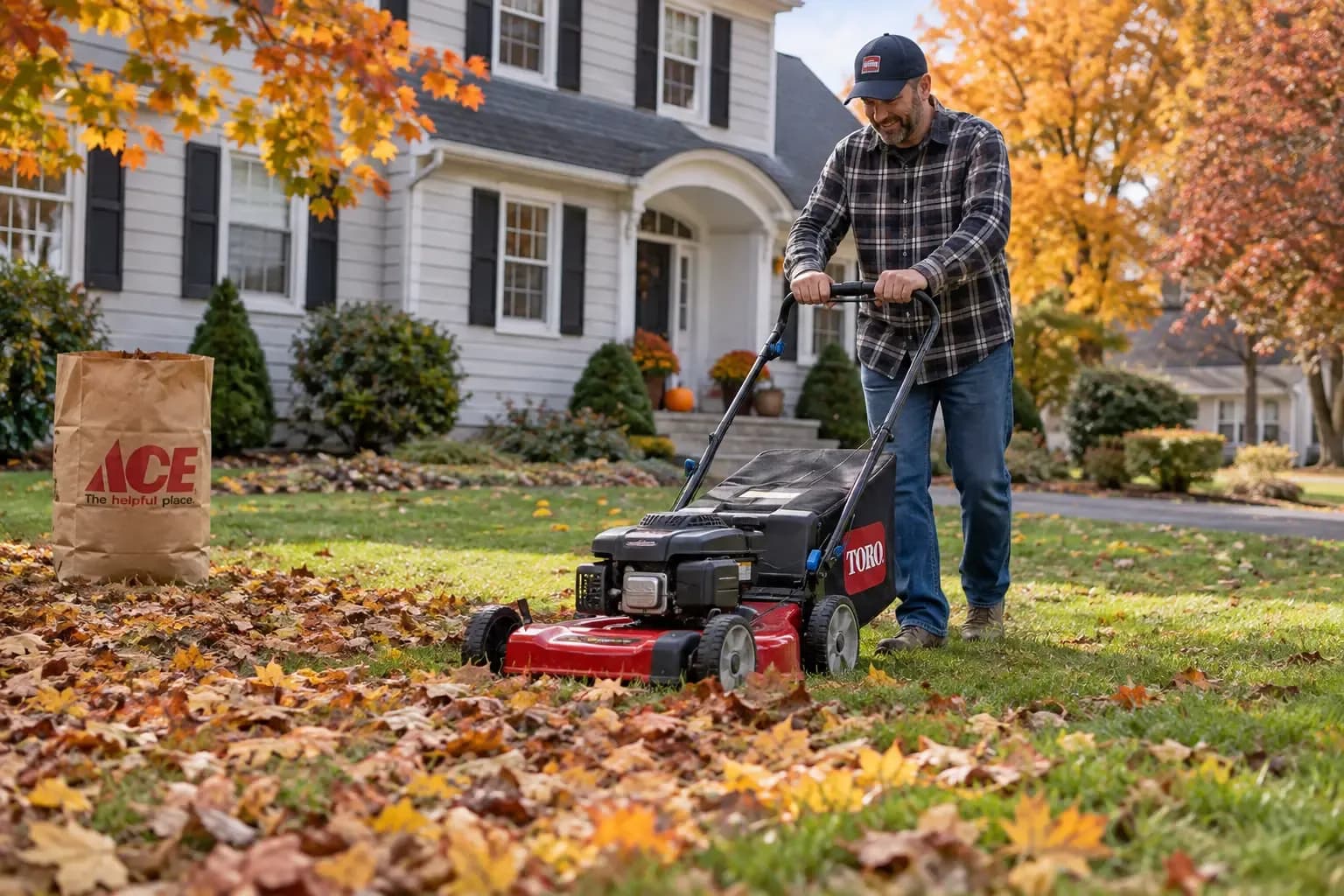
For most lawns, mulching leaves with your lawn mower is the easiest way to handle fall cleanup and the best thing you can do for your grass. Skip the raking, chop the leaves into small bits, and let them feed the soil over the winter.
Of course, some Monroe County yards have more leaves than a mower can handle. This guide covers when to mulch, when to rake or bag, which tools are worth it, and what your town will actually pick up this year.
Should You Rake, Mulch, or Bag?
Start with three questions: How many trees do you have? How deep do the leaves get? And what does your town allow?
| Your situation | Best option | Why |
|---|---|---|
| Light to moderate leaves, a few trees | Mulch with your mower | Fastest, free, and feeds the lawn |
| Heavy leaves from several big trees | Mulch some, collect the rest | Too much chopped leaf can smother grass |
| Leaves in beds, along fences, on the driveway | Blower or rake | Mowers can't reach these spots |
| Your town picks up loose piles | Rake or blow to the curb | Follow your town's placement rules |
| Your town only takes bags or has no pickup | Mulch, compost, or bag | Check the town list below |
The bottom line: mulch whatever your lawn can absorb. Collect only the extra.
How to Mulch Leaves With Your Lawn Mower
Mulching leaves with a lawn mower takes about as long as a regular mow. Here's how to do it right:
- Wait for dry leaves. Wet leaves clump, stick to the deck, and leave soggy mats behind.
- Raise the deck. A higher cut gives leaves room to circulate and get chopped (more on height below).
- Remove the bag or close the side chute. You want leaves to stay under the deck and get cut again and again.
- Use a mulching blade if you can. Mulching (3-in-1) blades have extra cutting edges that chop leaves finer. A sharp standard blade works too. A dull one just tears.
- Make overlapping passes. Go slow and overlap each row by about a third. On heavy leaf days, make a second pass in the other direction.
- Stop when the pieces are about dime-sized and you can see grass. If the lawn still looks buried after two passes, it's time to collect some leaves.
Riding mowers and lawn tractors: The same steps apply. Close or block the side discharge (many decks accept a mulching kit), keep your ground speed low so the blades can keep up, and raise the deck a notch. If your tractor has a bagger, you can bag the chopped leaves on the final pass and use them in garden beds.
Mower height for mulching leaves
Set your deck at the high end of your normal mowing range, typically around 3 to 3.5 inches for most northern lawns. Too low and the mower bogs down and scalps the grass. Too high and leaves slide past uncut. If the mower struggles, raise it a notch and slow down.
Can mulching leaves kill your grass?
Not when you do it right. The problem is too much. A thick or wet mat of leaves blocks sunlight and holds moisture, which can smother grass and invite disease going into winter.
Watch for these warning signs and collect or bag instead:
- You can't see grass blades after two passes
- The leaf layer is several inches deep before you start
- Leaves are soaked and matted from days of rain
- You're dealing with late-season leaves after the grass has gone dormant under snow
Extra chopped leaves don't have to go to the curb. Rake them into garden beds or around shrubs, where they act as free mulch.
Leaf Blower vs. Leaf Vacuum vs. Rake: Which Tool Fits Your Yard?
Even if you mulch most of your lawn, you'll still need something for beds, walkways, and driveways.
Leaf blower: Best for clearing hard surfaces and beds or pushing everything into one pile. Fast, but it moves leaves rather than removing them.
Leaf vacuum or blower/vac: Sucks up leaves and shreds them into a bag, so they take far less space. Best for small yards, beds, and tight corners; slow on big open areas.
Rake: Quiet, cheap, and never needs a charge. Still the best tool for pulling leaves out of shrubs.
Battery vs. gas leaf blowers
| Battery | Gas | |
|---|---|---|
| Pros | Quiet, no fumes, starts instantly, very little maintenance, shares batteries with other tools in the same brand family | Runs as long as you have fuel, strong airflow, good for large lots and wet leaves |
| Cons | Run time is limited by the battery; extra batteries add cost | Louder, needs fuel mixing or fresh gas, pull-start, more maintenance, needs winterizing |
| Best for | Most suburban lots, quick cleanups, noise-sensitive neighborhoods | Big properties, heavy leaf loads, long sessions |
If you already own battery tools from one brand, sticking with that platform saves money. Weider's is an authorized EGO and STIHL dealer, and we're happy to put a blower in your hands so you can feel the weight and balance before you buy. We service what we sell, too.
Rochester-Area Leaf Pickup Rules by Town (2026)
Rules vary a lot around Monroe County. We checked each town's official website in late September 2026 and note where 2026 dates weren't posted yet. Always confirm with your town before you rake to the curb.
City of Rochester: Yes. Free loose-leaf collection each November. Rake loose piles between the sidewalk and curb before the Monday of your scheduled week, never into the street. Bagged leaves can go out on any regular refuse day. Find your week on the city's interactive map or in the At Your Service Guide, or call 311. City leaf page
Brighton: Yes, bulk and containerized. Keep piles out of the road and gutters. Small loose piles aren't collected, so use paper yard bags or lidded containers under 50 lbs. Resident drop-off at 1941 Elmwood Ave (bring ID). 2026 start date not yet posted. Highway Dept: 585-784-5280. Brighton leaf page
Greece: Yes, bagged only. October 5 through December 2, 2026, on a two-week rotation by area. Paper bags (no plastic) or tagged 30-gallon cans under 50 lbs, at the curb the day before your date. Year-round drop-off at 635 Flynn Road. Greece leaf page and street lookup
Pittsford: Yes, loose piles. Starting October 20, crews visit each neighborhood about every three weeks. Pile leaves behind the curb, not in the road, with brush kept separate. Highway Dept: 585-248-6270. Pittsford leaf page
Webster: Yes, loose piles at the end of your lawn, not in the road, gutter, or shoulder. Crews work by zone, west to east. 2026 start date not yet posted. Webster leaf page
Perinton: Yes. Bulk pickup takes about 4 to 6 weeks per pass through town. Pile leaves by the curb, not in the road or behind mailboxes, trees, or hydrants. Open containers under 50 lbs go weekly on your yard debris day. Village of Fairport residents should check with the village. Highway Dept: 585-223-5115. Perinton leaf page
Gates: Yes. Unbagged leaves are collected late October through December, weather permitting. After that, bag them for your garbage hauler. Gates Highway page
Irondequoit: No curbside pickup (the town is studying adding it). Drop off leaves in paper bags at the DPW, 2629 E. Ridge Road, with ID. 2026 dates not confirmed; check with your town. Irondequoit drop-off page
Henrietta: No town pickup. Your licensed hauler must take yard waste, under its own bag rules. Fall drop-off weekends are held at 520 Middle Road; 2026 dates not confirmed, so call DPW at 585-359-7005. Henrietta refuse page
Penfield: No town pickup. Mulch, compost, or hire a landscaper, and never put leaves in gutters or catch basins. The town brush drop-off doesn't take leaves. Penfield disposal page
Village of Honeoye Falls: Yes, loose leaves only, October through Thanksgiving. Rake leaves into a row parallel to the road on the grass in front of your home, not into the street, and keep brush out of the piles. No spring pickup. Village Office: 585-624-1711. Residents of the surrounding Town of Mendon should check with the town. Honeoye Falls leaf page
Put Your Leaves to Work: Composting and Leaf Mold
Leaves are free organic matter. Here's how to use them:
- Mulch your beds. Shredded leaves spread 3 to 4 inches deep around shrubs and perennials hold moisture and block weeds, according to Monroe County Cornell Cooperative Extension.
- Feed your compost pile. Leaves are "browns" that balance kitchen scraps and grass clippings. Bag a few extra now and add them through next summer.
- Make leaf mold. Pile shredded leaves in a wire bin, keep them damp, and wait. In a year or so you'll have dark, crumbly soil conditioner.
- Leave some for wildlife. Leaves under shrubs shelter overwintering butterflies and beneficial insects.
Need backyard composting help? Call Cornell Cooperative Extension of Monroe County at (585) 753-2550.
Your Fall Leaf Cleanup Shopping List
Everything here solves a real leaf-season problem, and you'll find it in our outdoor equipment and lawn and garden departments. Stop in and we'll help you pick the right size and fit.
- Mulching blade so your mower chops leaves fine instead of pushing them around
- Leaf blower (battery or gas) to clear beds, driveways, and walks fast
- Leaf vacuum or blower/vac to shred and shrink leaves so they fit in fewer bags
- Wide leaf rake and shrub rake for tight spots and final touch-ups
- Tarp to drag big piles to the curb or compost area in one trip
- Paper lawn and leaf bags for towns that require bagged or containerized leaves
- Work gloves to save your hands from blisters
- Compost bin to turn extra leaves into free garden soil
- Fresh fuel and stabilizer (gas equipment) so your blower starts every time
Is Your Mower Ready for Leaf Season?
A dull blade doesn't cut leaves. It rips them, leaving bigger pieces, more passes, and more strain on your engine. After a full summer of mowing, your blade is probably due.
Bring the blade (or the whole mower) to any Weider's store. Our sharpening shop handles straight, mulching, and commercial mower blades. Our outdoor power equipment shop does full mower tune-ups: fresh oil, air filter, spark plug, fuel system cleaning, and a sharpened, balanced blade. It also repairs gas and battery leaf blowers. Mulching goes faster with a sharp blade, and your mower will be ready for winter storage.
Get Ready for Leaf Season at Weider's Hardware
Need a mulching blade, a blower, leaf bags, or a sharpened blade? Stop by any of our three stores in Brighton, Fairport/Perinton, and Honeoye Falls. Find your nearest location for hours and directions, or contact us with a question.
Frequently Asked Questions
Is it okay to leave mulched leaves on a lawn?
Yes. Finely chopped leaves settle down between grass blades and break down over winter, adding organic matter to the soil. The key is quantity: after mulching, you should be able to see plenty of grass. If the lawn is still covered, rake or bag the extra and use it in garden beds or compost.
What are the downsides of mulching leaves?
Too many leaves can smother grass, especially when they're wet and matted. Mulching wet leaves also clogs the deck and strains the mower. It takes longer on heavily wooded lots, and a dull blade leaves big pieces behind. Mulch dry leaves, keep the blade sharp, and collect any excess.
Is it okay to pick up leaves with a lawn mower?
Yes. If your mower has a bagger, you can chop and collect leaves in one pass. Shredded leaves take up much less space than whole ones, so you'll fill fewer bags. The chopped leaves are perfect for composting or spreading in garden beds as winter mulch.
What is the easiest way to mulch leaves?
Mow when the leaves are dry, with the deck raised and the bag off or side chute closed. A mulching blade helps a lot. Make slow, overlapping passes until the pieces are about the size of a dime and grass shows through. For deep piles, do a second pass in the opposite direction.
Can mulching leaves kill grass?
Only when the layer is too thick. A heavy, wet mat blocks light and traps moisture, which can weaken or kill turf over winter. If you can't see grass after two passes, remove some leaves. Mulching often throughout the fall, rather than once at the end, keeps the layer manageable.
What mower height should I use for mulching leaves?
Use the high end of your normal mowing range, typically around 3 to 3.5 inches for most northern lawns. That gives leaves room to circulate and get chopped. If the mower bogs down, raise it a notch and slow your walking or driving speed.
When should I stop mowing my lawn in the fall?
Keep mowing, and mulching, as long as the grass keeps growing and leaves keep falling. In the Rochester area that often means into November. Your last mow is a good time to mulch the final leaves, then sharpen the blade and winterize the mower.
Need a Hand With Your Project?
Stop by any of our three Rochester-area stores, or reach out and we'll help you sort out the details.